What if Your Weekend Plans Could Run Themselves? This App Keeps Everyone on Track
Imagine this: you and your friends are heading to a weekend getaway, excited and ready—but within minutes, someone’s lost, another’s hungry, and no one can agree on the route. Plans unravel fast. We’ve all been there. But what if the same phone in your pocket could actually keep your group in sync, stress-free? I’ve tried it, and honestly, it changed how we travel together—smoother, happier, and way more fun. It’s not magic, and it’s not some futuristic gadget. It’s a simple feature most of us already have, just used in a smarter way. And once you start using it, you’ll wonder how you ever planned a weekend without it.
The Weekend Chaos No One Talks About
Let’s be honest—weekends are supposed to be our time. Time to breathe, to reconnect, to laugh over coffee or wander through a new town with the people we love. But so often, the joy gets buried under the logistics. You’ve got Sarah saying she’ll meet you at the trailhead by 9, but it’s 9:28 and she texts, “I think I missed the turn.” Meanwhile, your sister’s asking, “Are we still doing lunch after the hike?” and your phone buzzes with three different group messages, each suggesting a different restaurant. By the time you sort it out, half the day is gone, and the mood? Not exactly relaxed.
I remember one fall morning when our friend group planned a leaf-peeping drive through the hills. We were all packed, playlists queued, excited for photos and pumpkin spice lattes. But within 15 minutes, two cars took different exits. No one had the same address pinned. One friend thought we were meeting at the visitor center; another assumed we’d just follow each other. The result? We spent more time coordinating than enjoying. There was no real conflict, just that low-grade frustration that comes from misalignment—like everyone’s rowing, but in slightly different directions.
That day stuck with me. Not because it was dramatic, but because it was so common. We all carry powerful tools in our pockets—smartphones with GPS, messaging, maps—but we use them in fragmented ways. We’re connected, yes, but not coordinated. And that gap? That’s where the stress sneaks in. It made me realize: what if our phones could do more than just tell us where to go? What if they could help us go there—together?
How Navigation Apps Evolved from Solo Tools to Group Helpers
Think back to the early days of GPS. You’d punch in an address, listen to a robotic voice say “recalculating” every time you missed a turn, and that was it. It was a solo experience—just you and the machine trying to get from point A to B. And honestly, for years, that was enough. But life isn’t lived in isolation. Our weekends, our errands, our adventures—they’re shared. So it only makes sense that the tools we use would evolve to support that.
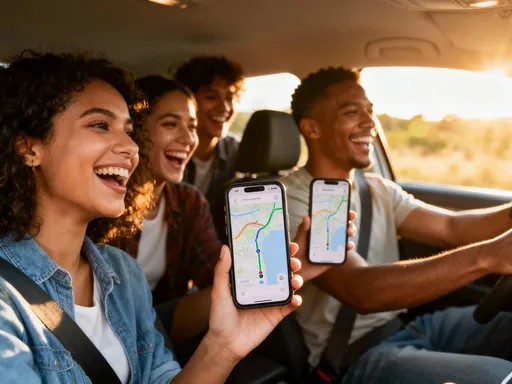
Today’s navigation apps have quietly added features that turn them into group coordinators. Real-time location sharing lets everyone see where each other is, not through constant texting, but through a simple, glanceable map. Synchronized routes mean you can set a destination once and share it with the whole group—no more “What’s the address again?” or “I’m not sure I’m on the right road.” Live ETAs update automatically, so you know when your friend is five minutes away, not “almost there” (which could mean anything from 2 to 20 minutes).
Some apps even let you vote on stops or reroute as a group. Imagine planning a road trip and being able to say, “Should we stop for coffee in the next town or wait until we reach the lake?” with a quick tap—no endless back-and-forth in the group chat. These aren’t flashy features. You won’t see them in big ad campaigns. But they’re the kind of quiet upgrades that make a real difference. They don’t just help you navigate the road—they help you navigate each other.
The Real Magic: Staying Connected Without the Chaos
The most beautiful part of this shift isn’t the technology itself. It’s what it frees up space for. When the logistics are handled quietly in the background, you’re left with more room for what really matters—conversation, laughter, the shared silence of driving through a beautiful landscape with people you love.
I’ll never forget the first time my mom used shared location during a family outing. She’s not what you’d call tech-savvy—she still refers to emojis as “those little picture words”—but I showed her how to turn on location sharing for our family group. She tapped a few buttons, and suddenly, all four of us could see each other moving toward the same park. No calls, no “Where are you?” texts. When we arrived, she looked up and said, “That was easy.” And it was. Not because the trip was complicated, but because it used to feel harder than it needed to be.
Now, when we plan a weekend brunch, we don’t waste time debating locations. We open the app, see everyone’s starting points, and pick a spot that’s fair for all. The app shows traffic, parking hints, even estimated drive times. We make a decision in under a minute. It’s not just efficient—it feels peaceful. Like we’ve replaced the low hum of stress with a quiet sense of alignment. And that, honestly, is the real win. It’s not about the app. It’s about how it helps us show up for each other, without the friction.
Making It Work: Simple Ways to Use Group Navigation in Real Life
You don’t need to be a tech expert to make this work. In fact, the best part is how simple it is to get started. Think of it like upgrading from sticky notes to a shared calendar—but for your movements. Here’s how I suggest beginning: pick a low-stakes outing. Maybe it’s a Saturday coffee run with a couple of friends, or a trip to the farmers’ market with your sister. Create a shared trip in your navigation app—most major ones have this feature built in—and invite the people going.
Once everyone’s in, pin the destination. Now, each person can see the route, traffic conditions, and each other’s progress. No more “I’m here!” texts. No more circling the block trying to find each other. And if someone’s running late? The app updates automatically. You’ll see their ETA shift in real time, so you can decide whether to grab a table or wait a few minutes—without the guessing.
Another trick I love? Using voice messages through the app while driving. Instead of pulling out your phone, you can say, “Leaving now, see you in 12 minutes,” and it sends as a voice note. It’s safer, it’s personal, and it keeps the conversation flowing without distractions. Over time, this becomes second nature. You’ll start doing it without thinking—just like you automatically set a reminder for your child’s dentist appointment or add milk to your grocery list.
The key is consistency. The more you use it, the more your group will trust it. And when trust is there, you can do things like take spontaneous detours—“Hey, there’s a cute antique shop up ahead, want to stop?”—knowing the app will guide you back to the plan. It’s not about losing control. It’s about gaining freedom.
Beyond Directions: How Shared Navigation Builds Better Moments
Here’s what surprised me the most: when the logistics fade, the moments get richer. On our last group hike, instead of arguing about which trail to take or checking my phone every five minutes, I actually listened. I heard my friend tell a story about her daughter’s first soccer game. I noticed the sunlight filtering through the trees. I laughed at a terrible joke that only made sense to us. These aren’t grand moments—they’re the quiet, ordinary ones that make up a life well-lived.
But they don’t happen when we’re stressed or distracted. They happen when we’re present. And shared navigation helps create that space. It doesn’t replace conversation—it protects it. It doesn’t take over the experience—it supports it. I’ve noticed we take more photos now, not because we’re trying to document everything, but because we’re relaxed enough to notice the beauty around us.
Even simple things feel different. Like when we’re driving and someone spots a roadside stand selling fresh peaches. In the past, we might have skipped it, worried about losing the group. Now? We just add it to the route. The app adjusts, shows new ETAs, and we go. No stress, no guilt. Just a little joy, unplanned but perfectly timed. That’s the kind of freedom that changes how you experience time. Weekends don’t feel shorter. They feel bigger.
Avoiding Common Pitfalls (Without Overcomplicating Things)
Of course, like any tool, it works best when used with a little thought. One concern I hear a lot is privacy—“Do I really want everyone knowing where I am all the time?” And that’s a fair question. The good news? You’re in control. Most apps let you share your location only during a specific trip or for a set amount of time. Once you arrive, it stops automatically. You’re not broadcasting your movements 24/7. You’re just sharing when it’s useful.
Another issue can be notification overload. If everyone’s pinging the group with updates, it can feel noisy. The fix? Set simple boundaries. Mute non-urgent alerts during the trip. Use the app’s built-in features instead of texting—like tapping “I’m here” or “Running 10 minutes late.” Keep the communication in one place, clean and clear.
And here’s a subtle but important one: don’t let the app make all the decisions. It’s a tool, not a boss. Vote on routes. Discuss stops. Let someone else pick the lunch spot, even if the app says it’s not the fastest. Keep the human element alive. Technology supports the group, but the group stays in charge. That balance is what makes it feel natural, not robotic.
I’ve also learned to be patient with people who are slower to adopt it. My cousin didn’t get it at first—“Why can’t we just text?”—but after one trip where she didn’t have to circle the parking lot three times, she was sold. It’s not about forcing everyone to change. It’s about showing how much easier it can be.
Why This Small Change Makes Weekends Feel Bigger
At the end of the day, we’re not just looking for better directions. We’re looking for better days. We want weekends that feel restful, not exhausting. We want to spend less time managing plans and more time making memories. And sometimes, the smallest shifts make the biggest difference.
Using shared navigation isn’t about becoming a tech wizard. It’s about reclaiming your time, your energy, your presence. It’s about arriving at the picnic spot not frazzled and late, but calm and ready to enjoy. It’s about hearing your niece’s joke because you weren’t busy texting “Where are you?” It’s about taking that unplanned detour to the flower farm because you trust the app to get you back on track.
I used to think the key to a perfect weekend was the destination—the best brunch, the prettiest trail, the coziest cabin. Now I know it’s something quieter: alignment. When everyone’s on the same page, when the little things don’t become big stressors, that’s when joy has room to grow. Technology, used wisely, doesn’t pull us away from each other. It helps us stay connected—in real life, in real time, with less effort and more heart.
So next time you’re planning a weekend with the people you love, try this small change. Share the trip. Sync the routes. Let the app handle the details. You might just find that your weekends don’t just run smoother—they feel fuller, richer, and more like the break you’ve been craving. Because when we spend less energy on logistics, we have more to give to what really matters: each other.